April 8, 2026
Most people think mapping is just about seeing where your customers live. It's handy for that, sure but if you’re only using it to plot pins, you’re missing the bigger picture. Location data is actually one of the best tools you have to stop things going wrong. When we talk about business risk, we usually think about bank rates or supply chains but where you put your people and your shops matters just as much.
At Atlas Mapping, we spend a lot of time looking at how geography affects the bottom line. If you get the location wrong, you don't just lose a bit of money, you can sink the whole ship. This is why a proper business risk analysis location strategy is so important for any company that wants to grow without the headache.
Spot the saturation before it bites
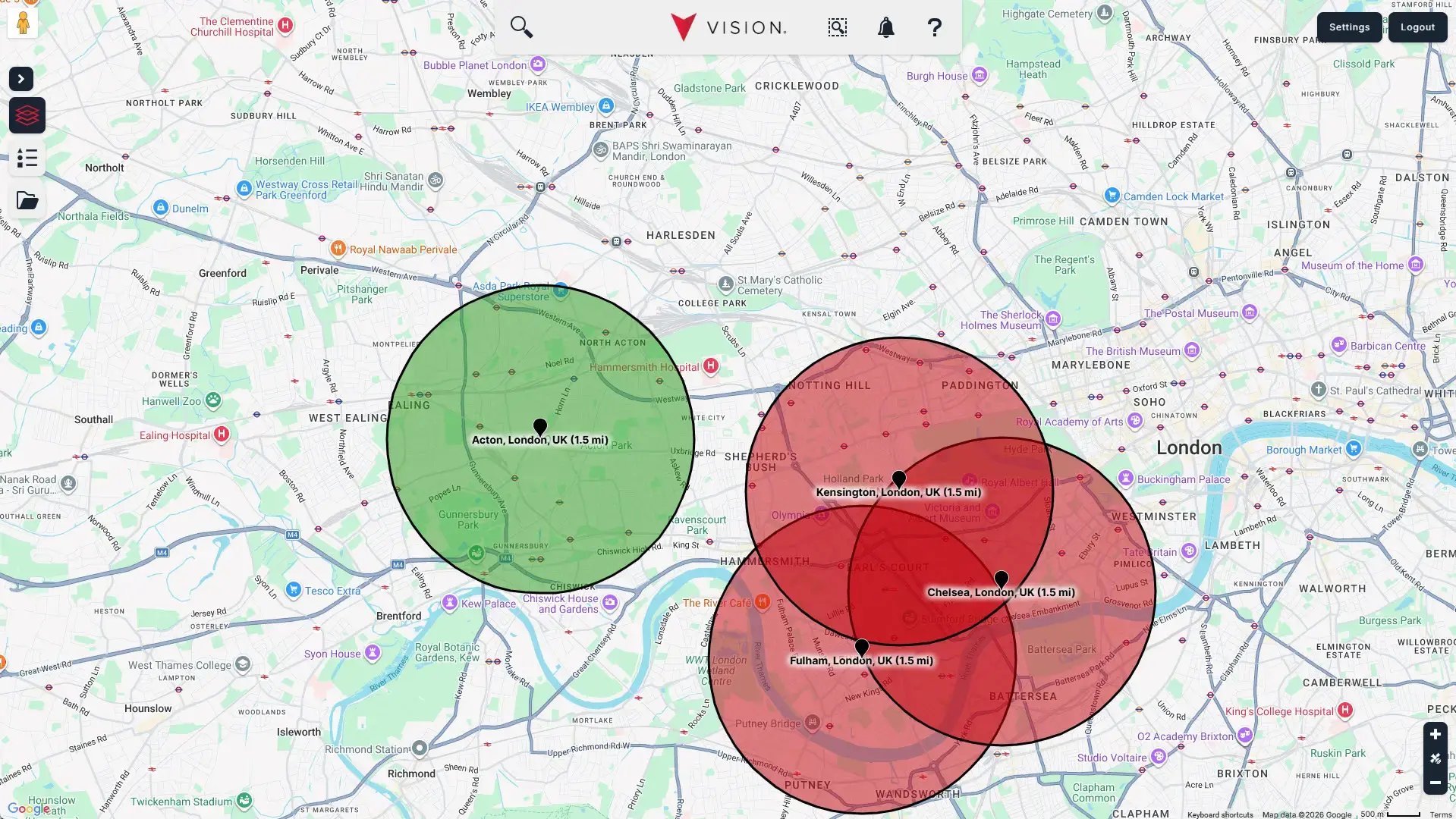
One of the biggest risks businesses face is cannibalisation. This happens when you open a new site or hire a new sales rep, and all they do is steal customers from your existing team. It's a bit like taking money out of your left pocket and putting it in your right. You haven't actually grown, but you've doubled your overheads.
We see this a lot in franchising and retail. You think the market is huge, so you keep expanding but if you don't look at the data, you end up overlapping. Use location data to see the "catchment areas" of your current locations. If those circles overlap too much, you’re at risk by doing a business risk analysis location check, you can see exactly where the boundaries should be. This protects your existing revenue while making sure new sites are actually hitting new people. Our Vision software makes this clear so you aren't just guessing based on a post code.
The hidden cost of the wrong patch
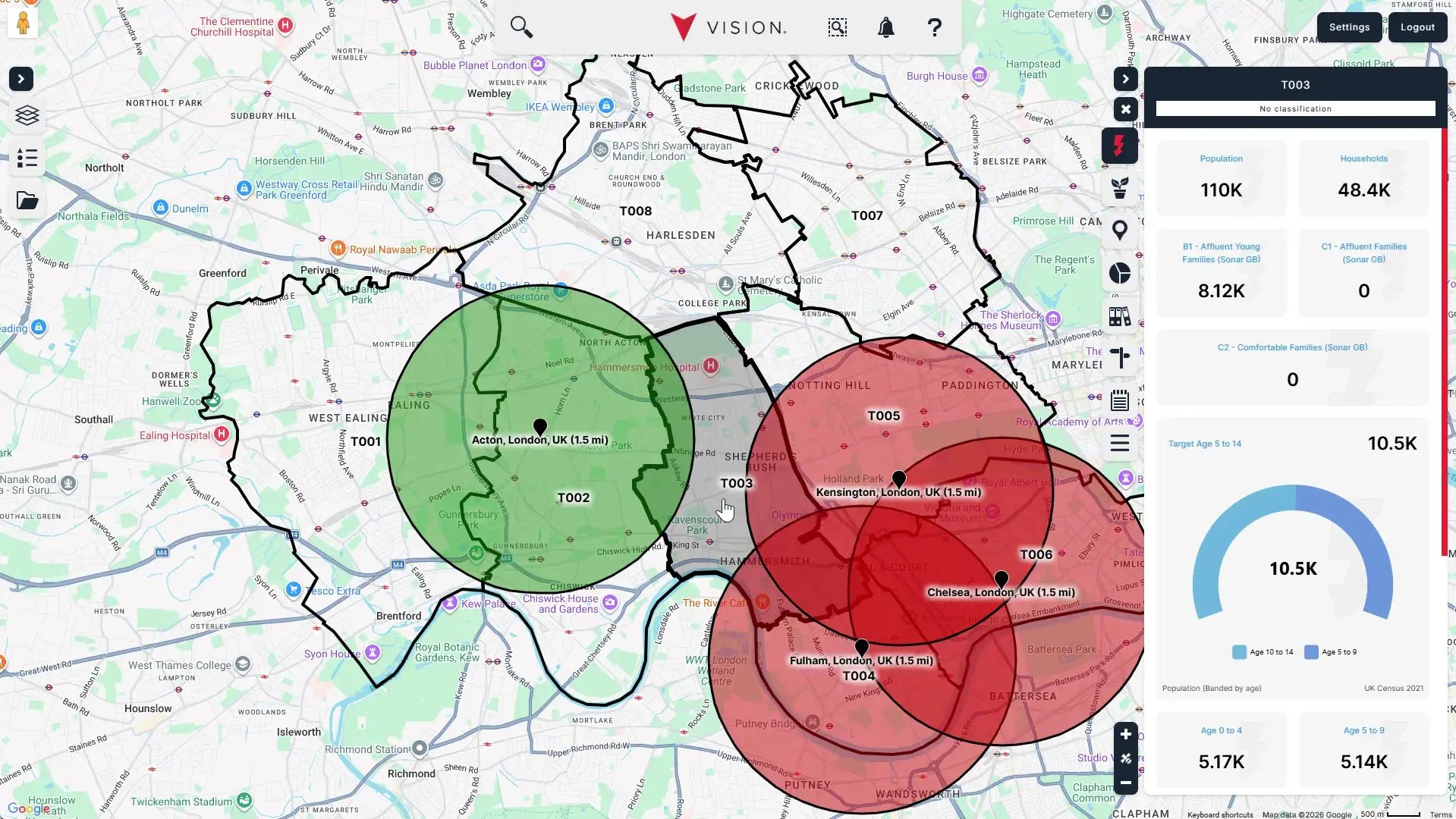
If you've got a sales team out on the road, their biggest enemy is the clock. We've seen plenty of companies give a rep a territory that looks small on a map but is a nightmare to drive. If your rep is stuck on the m25 for three hours every day, they aren't selling. They're getting frustrated and burning fuel.
That is a massive risk to your staff retention. People don't stay in jobs that make them miserable but it's also a financial risk. You're paying for a full-time salesperson but only getting a part-time one because of the traffic. We use drive-time mapping to fix this. Instead of drawing a circle, we look at how far someone can actually get in 45 minutes at 9 am on a Tuesday. It changes the way you see your map, makes the workload manageable and reduces the risk of your best people quitting because their patch is impossible.
Knowing your competition is nearby
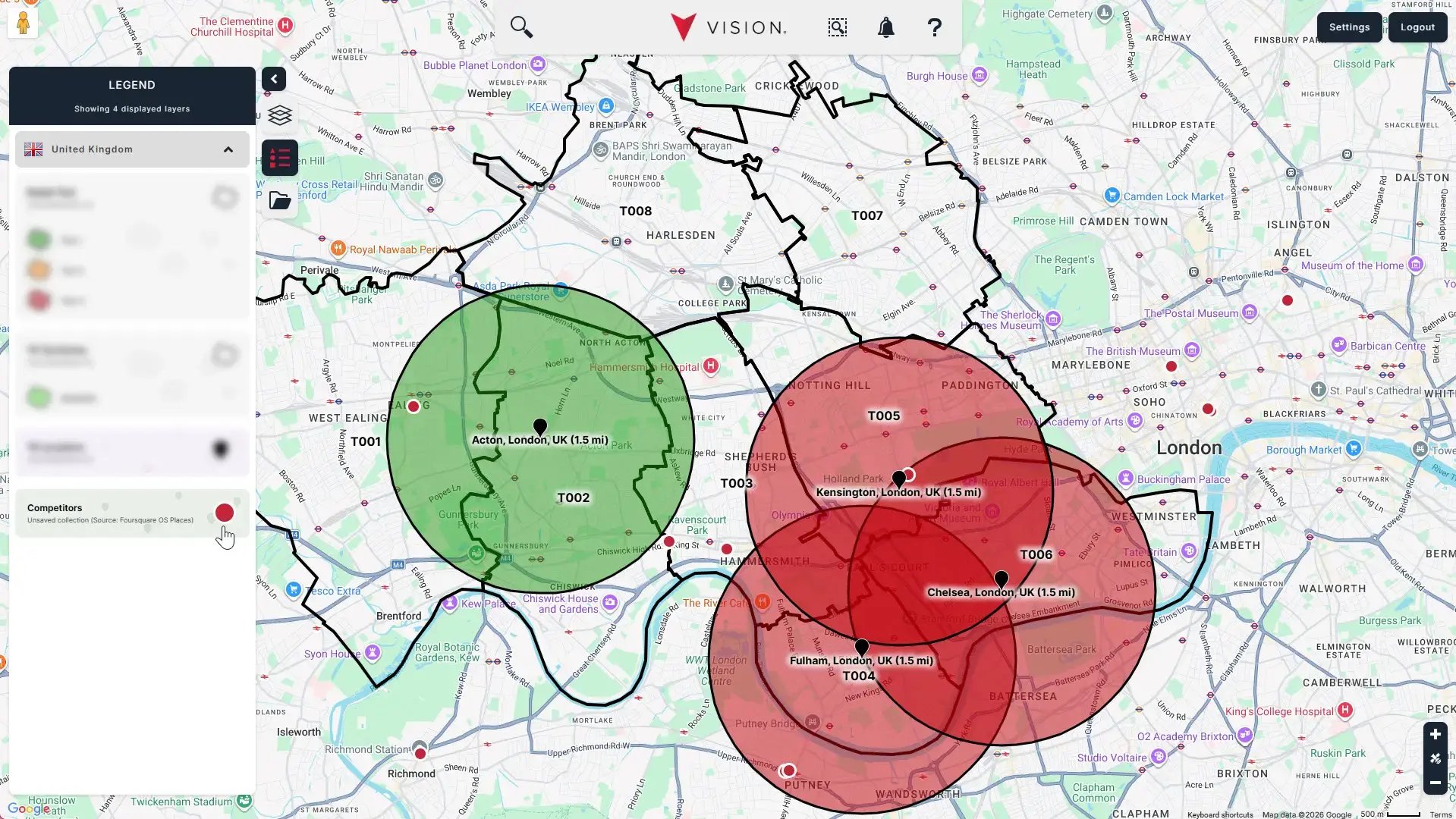
You might have found the perfect spot for a new office. The rent is cheap and the footfall is high but if there are three competitors on the same street, is it still a good idea? probably not. Location data helps you see the competitive landscape in a way a spreadsheet can't.
You can plot where your rivals are and see if they’re moving into your "territory." If you see a cluster of competitors popping up in a specific town, that's a signal. Maybe that market is becoming too crowded or maybe it’s a sign that you need to double down on your marketing there to protect your share. Being proactive is always better than reacting after your sales start to dip and that’s essentially what a business risk analysis location is for. It gives you a heads-up so you can move first.
Demographics change and so should you
The world doesn't stay the same. A town that was perfect for your luxury brand ten years ago might have changed. People move, industries shut down, and new developments go up. If you're relying on old data, you’re taking a massive gamble.
We help businesses layer demographic data over their maps. This shows you who actually lives there now. Are they the right age? Do they have the right income? If the "vibe" of an area changes, your business needs to know. I guess it's about being honest with yourself. If the data says your customers aren't there anymore, you have to listen. Ignoring that is a huge risk. At Atlas Mapping, we don't just give you a map and leave you to it. We help you understand what the layers of data are actually telling you about your future.
Why spreadsheets aren't enough
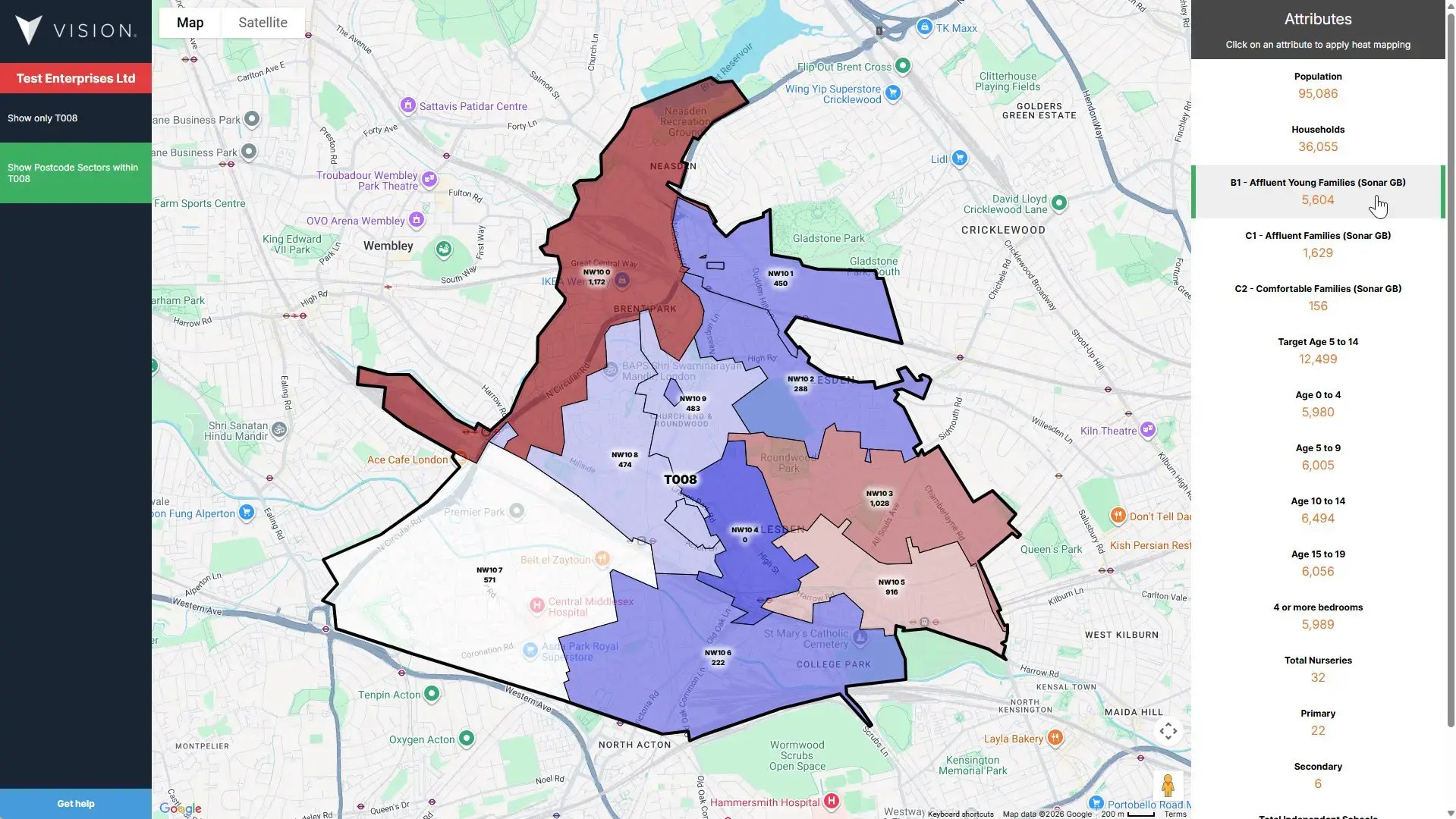
We’ve seen people try to manage all of this in excel. They have columns for postcodes and rows for sales figures. It looks organised, but it doesn't tell a story. You can't "see" a gap in a spreadsheet. You can't see that two sales territories are overlapping by ten miles just by looking at a list of numbers.
Visualising data is the only way to truly understand risk. When you see your business on a map, the problems jump out at you. You see the gaps, the overlaps and you see the opportunities you’re missing. It's all about clarity. We built our services to provide that clarity. Whether you use our software or have us do the mapping for you, the goal is the same. We want you to have a single source of truth that the whole team can trust.
Making better decisions
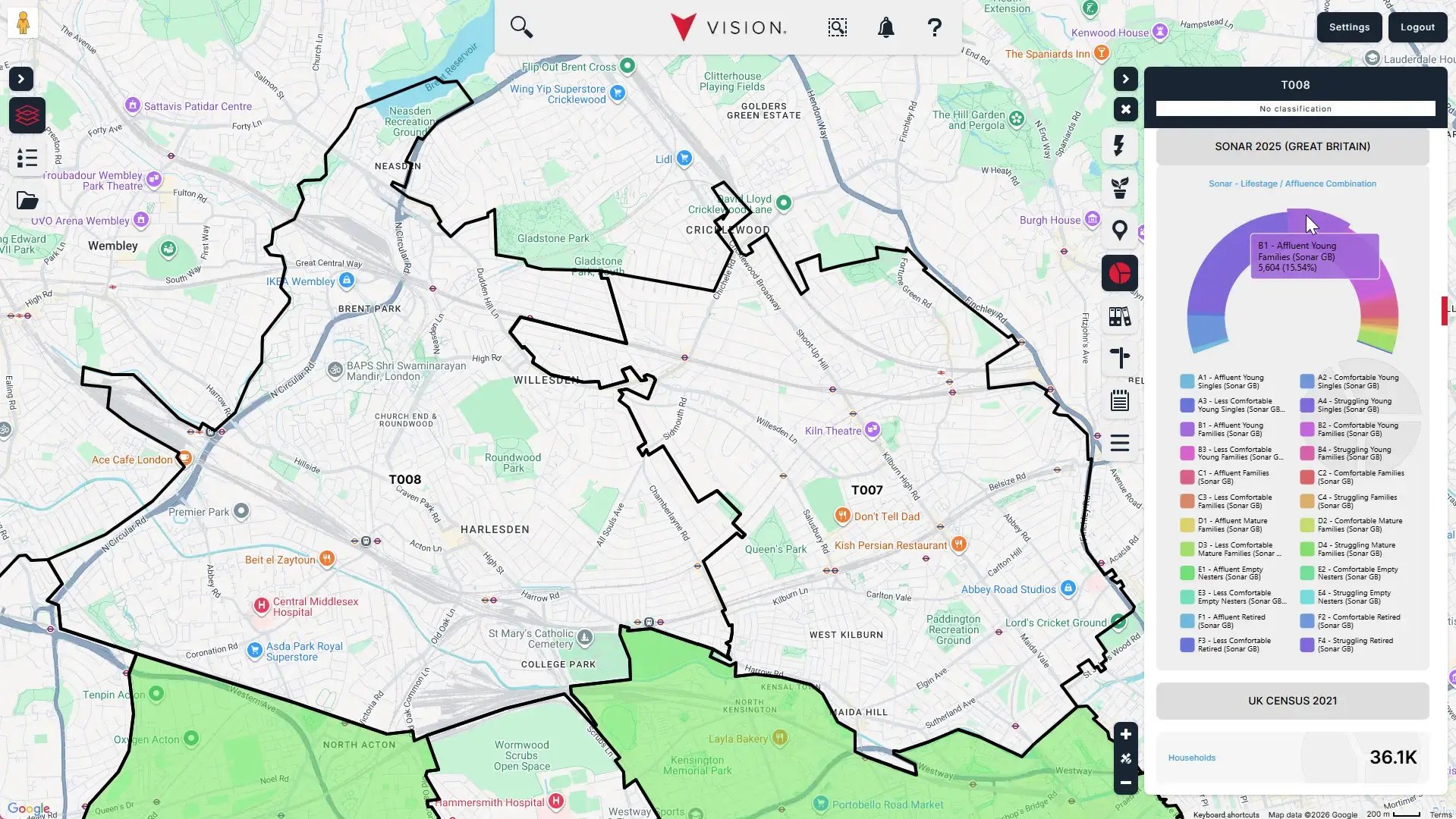
At the end of the day, reducing risk is about making better decisions. It's about having the confidence to say "no" to a new site because the data shows it won't work. Or having the confidence to split a territory because there’s too much potential for one person to handle.
It's not just about avoiding bad things. It's about making sure the good things actually happen. When you reduce the risk of travel time or cannibalisation, you’re clearing the path for growth. It makes the business more stable and a stable business is a lot easier to run.
If you want to see how this works for your own data, we can show you. We don't do the hard sell. We just show you the maps and let the data talk. If your current plan feels a bit shaky or you’re worried about where you’re headed, have a look at our territory mapping services. It might just save you a lot of trouble down the line.
Using location data isn't just a "nice to have" anymore. It's a basic part of running a smart business. If you aren't looking at your maps, you’re flying blind. In today's market, that’s a risk you probably don't need to take but with the right tools and a bit of logic, you can map your way to a much safer future.


.svg)