March 6, 2026
If you've ever felt like your sales team is working against the map rather than with it, you aren’t alone. Most of the time, we see businesses drawing lines based on what "looks right" or using old postcodes that haven't been updated since the 90s but a high-performing territory isn't just a shape on a screen. It's a balanced, data-driven patch that gives your reps a fair crack at hitting their targets without burning out.
Getting this right is basically the secret to growth. When you nail your sales territory analysis, you stop guessing where the money is and start seeing it clearly. At Atlas Mapping, we’ve helped loads of brands move away from messy spreadsheets and into a more logical way of working. Here's what actually makes a territory perform.
It’s about potential, not just geography
One big mistake people make is thinking that two territories of the same size are equal but they aren’t. You might have one rep covering half of London and another covering the whole of Cumbria. On paper, the Cumbria rep has "more" land, but the London rep probably has ten times the number of potential customers.
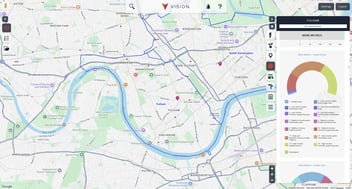
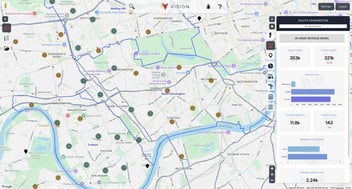
A high-performing territory is built on market potential. You need to look at how many "ideal" customers are actually in that area and this is where a proper sales territory analysis comes in handy. It lets you see the density of your target audience. If you're selling to schools, you need to know where the schools are, not just where the most roads are. We use our Vision software to help businesses plot these pins so they can see exactly where the "white space" is. That's the untapped area where your competitors might be sleeping.
Balance is better than "fairness"
We often hear managers say they want to be fair to their team but being fair doesn't mean giving everyone the same number of accounts. If one rep has 50 accounts that are all enterprise-level and require three meetings a week, and another has 50 small shops that only need a phone call once a month, that's not a balanced workload.
A top-tier territory accounts for the effort required. You have to think about travel time, especially if your team is out on the road. Nobody wants to spend four hours a day on the m6 when they could be closing deals. At Atlas Mapping, we talk a lot about "logic and grace." The logic is the data, and the grace is making sure the plan actually works for the humans doing the work. If your reps feel like they have a mountain to climb every Monday, their performance will dip but if the territory feels manageable and the goals are realistic, they’ll stay motivated.
Data should drive the decisions
Gut instinct is great for some things, but it doesn’t work for mapping. You need to bring together your CRM data, your sales history, and third-party demographics. This is where you find the patterns. Maybe you notice that your best customers all live in specific types of neighbourhoods or belong to a certain industry.
Once you have that info, you can use sales territory analysis to replicate that success elsewhere. Our Vision platform is designed to make this bit easy. It takes your messy data and turns it into something you can actually understand and it’s not just about where your customers are now, it’s about where they will be. A high-performing territory is forward-looking. It's not a static thing that you set and forget.
Stop the "turf wars"
Nothing kills a sales culture faster than reps arguing over who owns a lead because the boundaries are blurry. Clear boundaries are essential, you need a "single source of truth" that everyone can see. When territories overlap, you get double-handling, confused customers, and a lot of annoyed staff.
We always say that if a plan is too complex to explain, it’s a bad plan. Keep your boundaries sharp and easy to understand and make sure they’re accessible. If your team can log in and see their patch clearly, they spend less time debating who owns what and more time actually selling. It's about giving them ownership they can trust.
It needs to be flexible
The market moves fast. A territory that worked perfectly last year might be struggling now because a big competitor moved in or the local economy shifted. The best territories are reviewed regularly. We recommend a "health check" every few months to see if things are still balanced.
Most of all don't be afraid to change things but don't just change them because one person is complaining. Use the data to see if the complaint is valid. Maybe a rep is right and their patch has become "saturated," or maybe they just need a bit of coaching on how to tap into the potential that’s already there.
How to get started with Sales Territory Planning
If you're looking at your current setup and thinking it looks a bit like a jigsaw puzzle with half the pieces missing, don't worry. Most people start there, the first step is just getting your data in one place. See where your current customers are and then, look at where your prospects are.
At Atlas Mapping, we love solving these kinds of puzzles. Whether you want to use our Vision software to do it yourself or you want us to handle the mapping for you through our "mapping as a service" offer, we're here to help. We don't believe in over-complicating things. We just want to give you the tools to grow with confidence.
If you want to stop guessing and start growing, maybe it's time to take a proper look at your maps. A high-performing territory is waiting for you, you just need the right data to find it. Contact us today and we’re always up for a talk to find the best solutions for your business.

Over 15 years of experience strategically advising businesses using geo-data and leading the Atlas Mapping team. His work spans international markets and businesses of all sizes.

.svg)