January 22, 2026
If you want a sales team that hits targets consistently, you need more than talented people and a decent product. You need a clear, sensible plan for how your market is carved up. That is where sales territory planning comes in.
When territory planning sales is done well, your reps know exactly where to focus, customers feel properly looked after and managers get a clear view of what is working and where the gaps are. When it is done poorly, you see the opposite. Across the board, some reps are overwhelmed whilst others are underused so customers are never quite sure who their contact is.
In this post, we will walk through the key principles of effective sales territory planning and show how Atlas Mapping can help you put those principles into practice in a practical, real-world way.
What do we actually mean by sales territory planning?
Sales territory planning is the process of dividing your market into sensible chunks that individual salespeople or teams are responsible for. Those chunks might be shaped by geography, account size, industry, channel, or a combination of all of these.
The aim is simple. You are trying to match your sales effort to the opportunity that exists, and to do that in a way that feels fair and workable for the people doing the job.
In reality, a well-designed territory usually:
- Has enough potential to support realistic sales targets
- Feels manageable in terms of travel and workload
- Makes it completely clear who owns which customers and prospects
When you get the balance right this helps you cut down on overlap, close the gaps in your coverage and also makes life easier for both sales leaders and field reps.
Principle 1: Start with a clear, honest view of capacity
Before you even think about drawing boundaries, you need to understand what your team can genuinely handle. This may sound obvious however it is often a point that is usually overlooked.
First you want to look at the basics. How many reps do you have, where are they based and what portion of their time is genuinely available for selling, rather than admin, training or internal meetings? Then, you need to look into how much demand there is. How many active customers and live prospects do you have, how frequently do they need visiting and how long does a typical sales cycle take?
If one person can realistically manage around 60 active accounts, there is not much point handing them 120 and hoping they find a way to work it out. A strong sales territory structure is rooted in realistic capacity planning rather than optimistic assumptions.
Principle 2: Be clear on your ideal customer
Territories should reflect who you want to sell to, not just where people happen to be on a map. That is where your ideal customer profile comes in.
You might focus on:
- Specific sectors where your product or service is a particularly good fit
- Organisations of a certain size or complexity
- Customers with strong repeat or long-term potential
Once you know who you are targeting, you can prioritise the right accounts within each territory and avoid reps chasing low value leads simply because they fall inside an arbitrary boundary. This approach also helps you see which territories are rich in high potential accounts and which ones are more nurturing or maintenance focused.
Principle 3: Use data as your starting point, not your only input
Modern sales territory planning should be grounded in data. That might include:
- CRM data showing where customers and prospects are, and what they buy
- Historic sales performance by region or sector
- Location data and rough travel times
- Market or demographic data that highlights pockets of demand
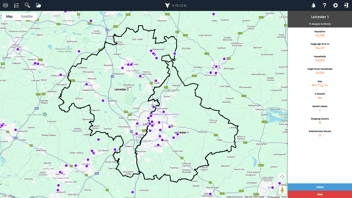
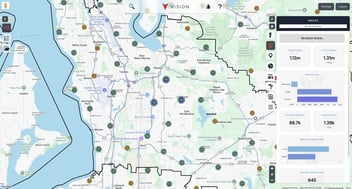
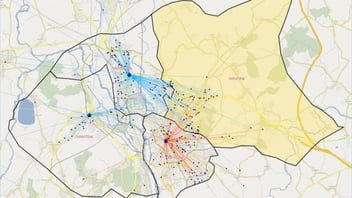
On its own, that information can feel overwhelming. This is where specialist sales territory mapping and optimisation tools become genuinely useful. Atlas Mapping, for example, takes your existing business and customer data and turns it into clear visual territory maps. Instead of squinting at a spreadsheet and trying to guess where the issues are, you can literally see where demand is concentrated, where coverage is thin and where reps are stretched.
Data should guide you, but it does not replace common sense. The best plans combine data with local knowledge and a healthy dose of practicality.
Principle 4: Balance workload and potential, not just square miles
Two territories can look the same size on a map and yet feel completely different to the people working them. One might have a few large, complex accounts that need frequent meetings, demos and stakeholder management. The other might have a long list of smaller customers that rarely need a visit but are spread over a wide area.
If you simply split the country into equal geographic regions, it is almost guaranteed that you will end up with an uneven structure. Some reps will be overloaded, others will have too little to go at and customers will notice.
A better approach is to think in terms of a workload or opportunity index. You might give each account a score based on size, required visit frequency, growth potential and travel effort. When you roll that up to territory level, it becomes much easier to see which areas are genuinely equivalent and which ones need reshaping.
This is a key area where Atlas Mapping adds value. By combining geographical, demographic and business data, you can design territories that feel fair from a rep’s point of view while still focusing your energy on the areas with the greatest potential.
Principle 5: Design territories that can evolve
A territory plan is not something you create once and hope never to touch again. Markets shift, people move roles, new products are launched and new regions become important. If your territories cannot flex, you will be forced into messy, reactive fixes.
Instead, build in the expectation that things will change. That might mean:
- Reviewing performance by territory a few times a year
- Making small, regular adjustments where workloads are clearly uneven
- Having a plan for how new hires will slot into the network
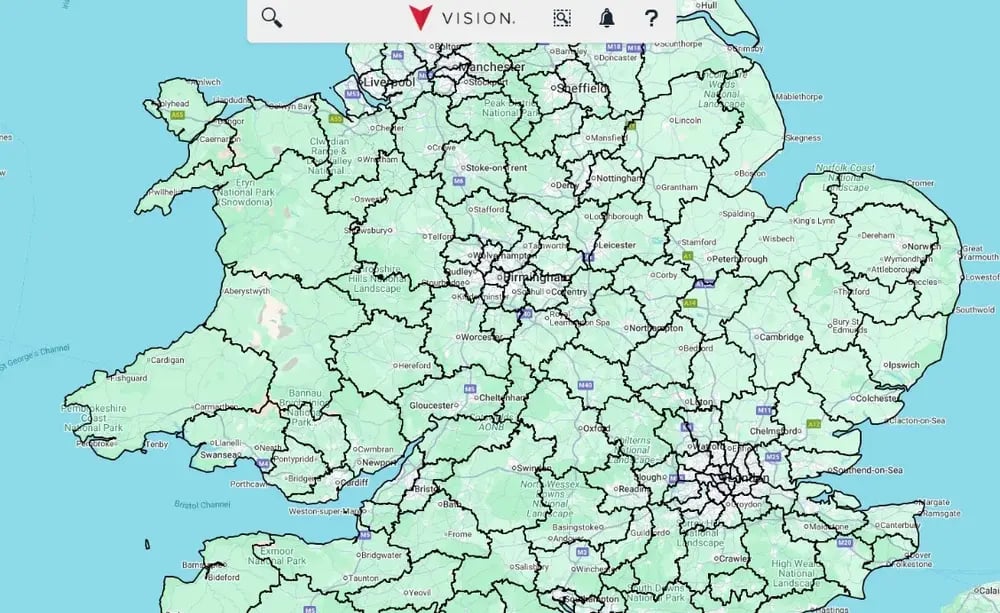
Atlas Mapping supports this with a structured approach to territory mapping and clear outputs that are easy to revisit. Once your territories are defined, they can be loaded into the Atlas Mapping Vision platform so you have a living view of your network, not just a static PDF that is out of date within six months.
Principle 6: Listen to the people who work the patch
Some of the best insight comes from the reps and managers who already work those areas. They know which routes are slow, which customers always overrun and where boundaries feel awkward or confusing.
When you involve the field in the conversation, ask questions like:
- Where do you lose the most time in travel or admin?
- Which customers take more attention than their revenue suggests?
- Where does the current map cause headaches for you or your customers?
Blending this local knowledge with solid data gives you a plan that works on paper and feels realistic on the ground. It also makes it far easier to land changes without a backlash. People are more likely to support a new territory structure if they can see their experience reflected in it.
How Atlas Mapping supports smarter territory planning
Atlas Mapping specialises in sales territory mapping and territory design for organisations that want a more intelligent, joined-up approach to coverage. Working alongside your sales and leadership teams, we take your customer and prospect locations, along with any relevant business data, and turn them into a logical, balanced territory network.
The support typically includes:
- Analysing where your customers and prospects are based
- Designing new territories that reflect workload, potential and practical travel patterns
- Using distance and drive time data to keep territories realistic
- Producing clear maps and territory files that plug into your CRM and other systems
- Providing an ongoing way to maintain and refine your territory network as things change
For many businesses, moving from manual, spreadsheet based territory planning sales to this kind of structured, data driven approach is a real step change. Leaders gain confidence that territories are fair and aligned to strategy. Reps get clarity about their patch, and customers experience more consistent contact and service.
Common mistakes to watch out for
Even with the right intentions, it is easy to fall into a few traps:
- Splitting territories purely by geography and ignoring workload or value
- Letting one or two high performers keep every valuable account
- Leaving the whole plan hidden in a complicated spreadsheet
- Rolling out a new map with little explanation or input from the field
Avoiding these pitfalls makes a big difference to both performance and morale.
Final thoughts
Effective territory planning is not just about drawing lines on a map. It is about how you deploy your salespeople, how you treat your customers and how you set the business up for growth.
When you use data intelligently, balance workload with opportunity, involve your team and keep territories flexible, you create a structure that can support you for years, not months. Atlas Mapping exists to support exactly that kind of thinking, with tools and expertise that bring clarity to what can otherwise feel like a messy, political process.
If you are ready to rethink how your territories are set up, this could be a good moment to step back, look at your maps with fresh eyes and see what a more considered, data led approach could unlock for your sales organisation.
Here at Atlas Mapping, we’ve worked with a wide range of industries, from healthcare to education, helping organisations make confident, informed decisions and plan for future growth. If you’d like to streamline and strengthen your territory mapping, get in touch by giving us a call on 01733 314245 or completing our online contact form to start your journey today.


.svg)