April 29, 2026
When a business is choosing a new location, many decision-makers lean heavily on demographics. They look at age, income, household size, or social grade, thinking these numbers alone will point to the perfect spot. But relying on demographics in isolation is like trying to navigate with a single star—you might get somewhere, but not necessarily where you want to be.
The Limits of Demographics
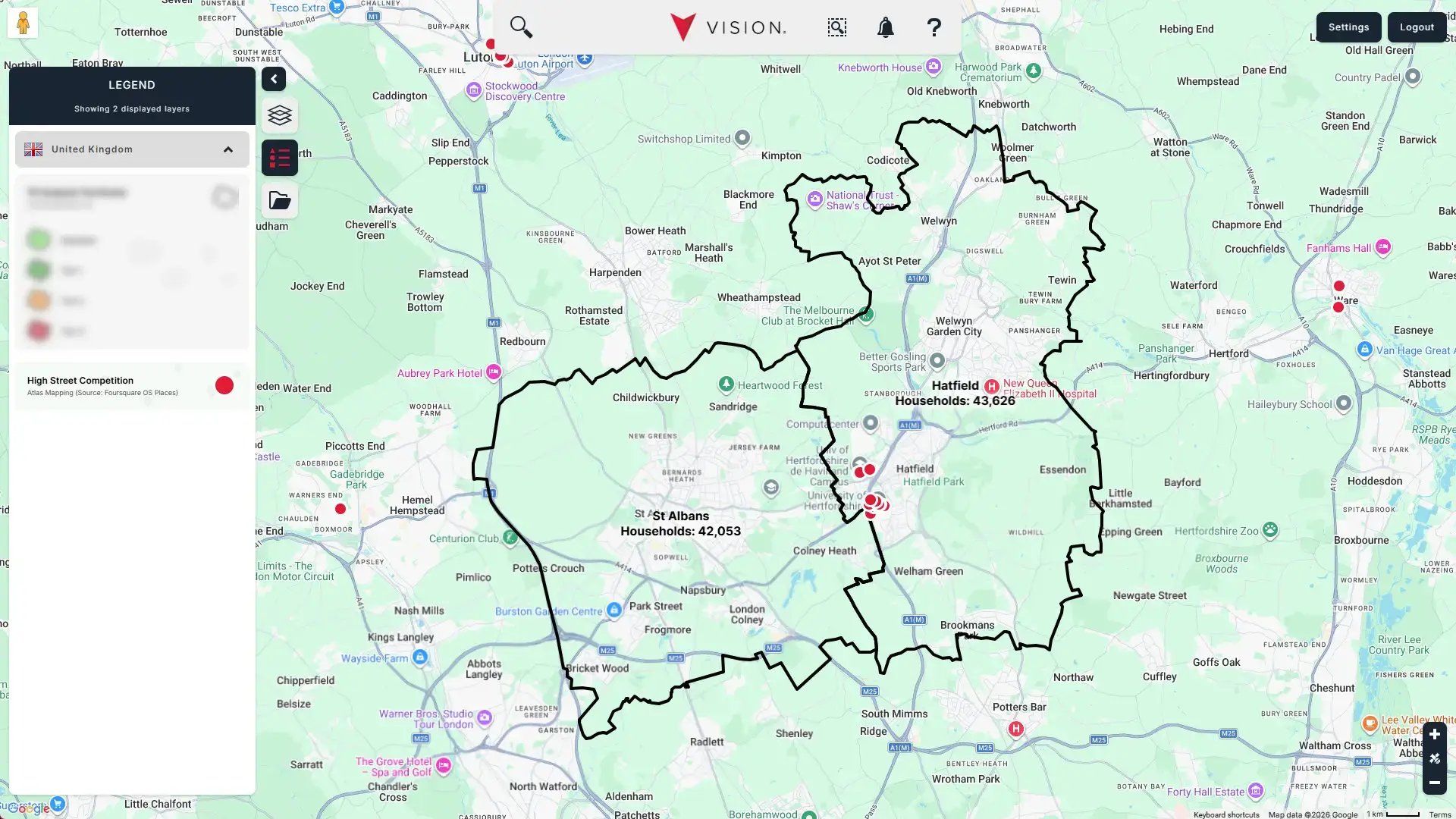
Demographics are helpful—they give a broad picture of a population. But they don’t capture the full story. Consider this: two areas might have identical ABC1 proportions, household incomes, and average ages. On paper, they look like twins. Yet one thrives with a new retail outlet, while the other struggles. Why? Because demographics don’t account for behaviour, competition, or local dynamics.
Focusing solely on demographics can lead to:
- Overestimation of demand: You might assume a wealthy area will automatically spend on your product, ignoring preferences or lifestyles.
- Underestimating competition: A high-income postcode may already be saturated with similar offerings.
- Ignoring footfall patterns: People might live in an area but shop elsewhere.
Beyond Demographics: The Other Pieces of the Puzzle
To plan locations effectively, businesses need to consider a combination of factors that go beyond who lives in a postcode.
1. Footfall and Traffic Patterns
Knowing where people live doesn’t tell you where they go. Footfall—both pedestrian and vehicular—directly affects a business’s visibility and accessibility. A café, for instance, needs high pedestrian traffic during morning and lunchtime hours, not just affluent residents nearby.
2. Competitor Mapping
Understanding the density and performance of nearby competitors is critical. Demographics alone can suggest a market is ripe, but if every competitor is already entrenched, success becomes harder. Mapping competitors alongside demographic data reveals gaps, saturation points, and opportunities.
3. Consumer Behaviour and Lifestyle Data
People are more than a number on a chart. They have preferences, habits, and spending behaviours that vary even within similar demographic groups. Psychographic and behavioural insights—what people like, when they buy, how loyal they are—give context that pure demographics cannot.
4. Accessibility and Infrastructure
A great location must be reachable. Proximity to transport links, parking availability, and local amenities all influence footfall and long-term viability. These elements often outweigh demographic predictions.
5. Market Value and Potential
Every location has an intrinsic economic potential. Tools like Atlas Mapping’s Vision combine multiple data layers to show the real market value of a location—not just who lives there. This approach quantifies opportunity in a way demographics alone cannot.
Case in Point: Retail Expansion
Imagine a national coffee chain considering two new locations in Peterborough. Both have similar demographics: high-income professionals, young families, and vibrant local communities. However, one street has heavy footfall from office workers and limited coffee options nearby. The other is a residential road with excellent demographics but low day-time traffic and three competing cafés.
If the chain relied on demographics alone, it might choose the residential road and face slow uptake. By layering footfall data, competitor density, and spending behaviour, the better location becomes clear.
How to Integrate Demographics Into Location Planning
Demographics are not useless—they are the starting point, not the conclusion. Here’s how to use them effectively:
- Combine with geospatial analysis: Map demographic data alongside competitors, traffic, and spending patterns.
- Use catchment analysis: Identify where your potential customers live and where they shop.
- Test assumptions with real-world data: Footfall sensors, transaction records, and survey insights can validate predictions.
- Incorporate business intelligence tools: Platforms like Vision can consolidate multiple layers of data into actionable insights.
The Bottom Line
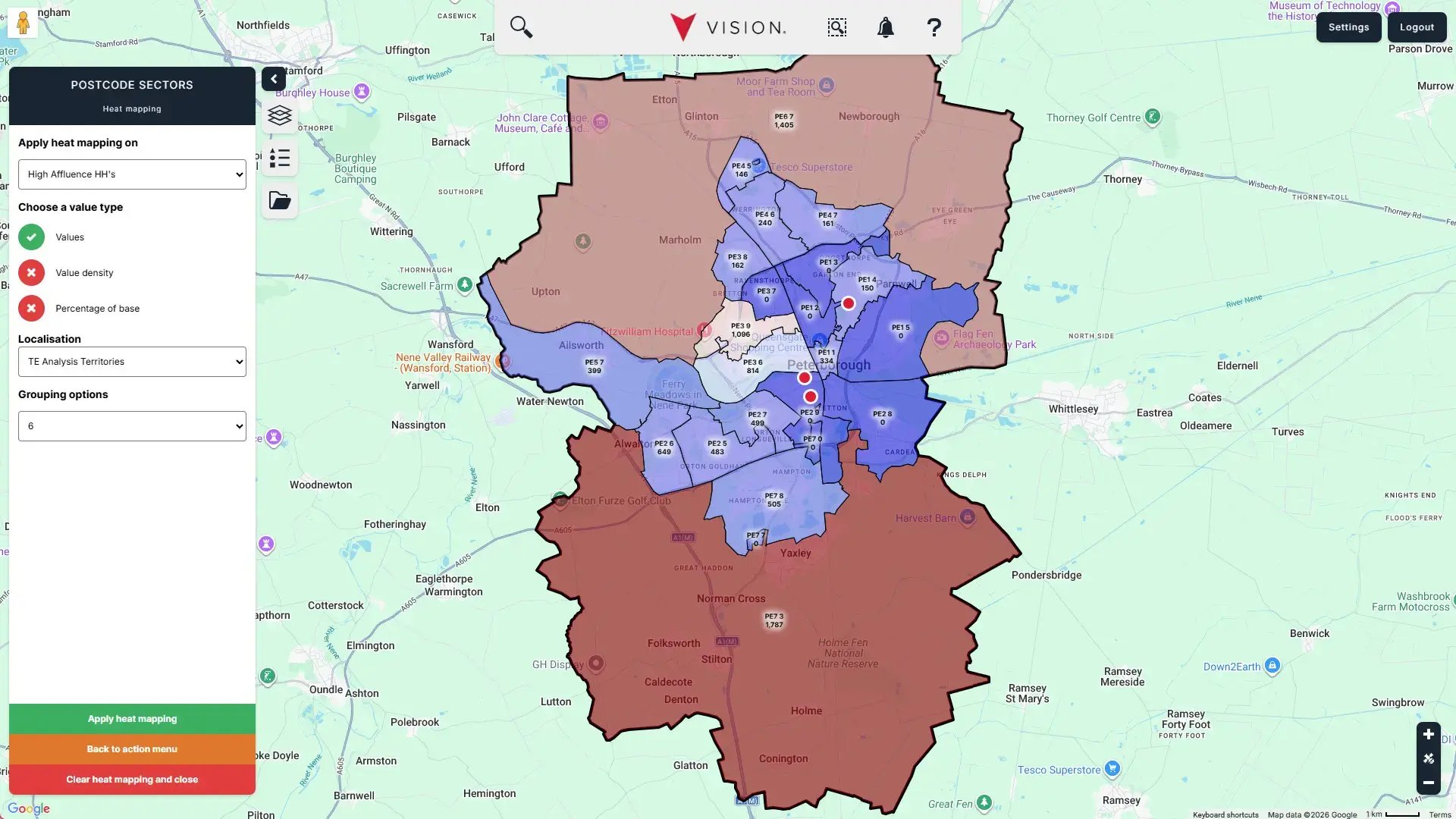
Location planning demographics give a rough outline, but real success comes from integrated insight. Businesses that rely on demographics alone risk costly mistakes, missed opportunities, and slow growth. Combining demographic data with footfall, competitor analysis, behavioural trends, and market value analysis allows decision-makers to see the full picture and choose locations that truly deliver.
In short, demographics tell you who lives there. The right location planning tools tell you whether it will work for your business.


.svg)